

- Are staff using AI tools without clear guidance or oversight?
- Could donor or client data be copied into public AI platforms right now?
- Would your leadership team know how to explain an AI-related incident to the board or donors?
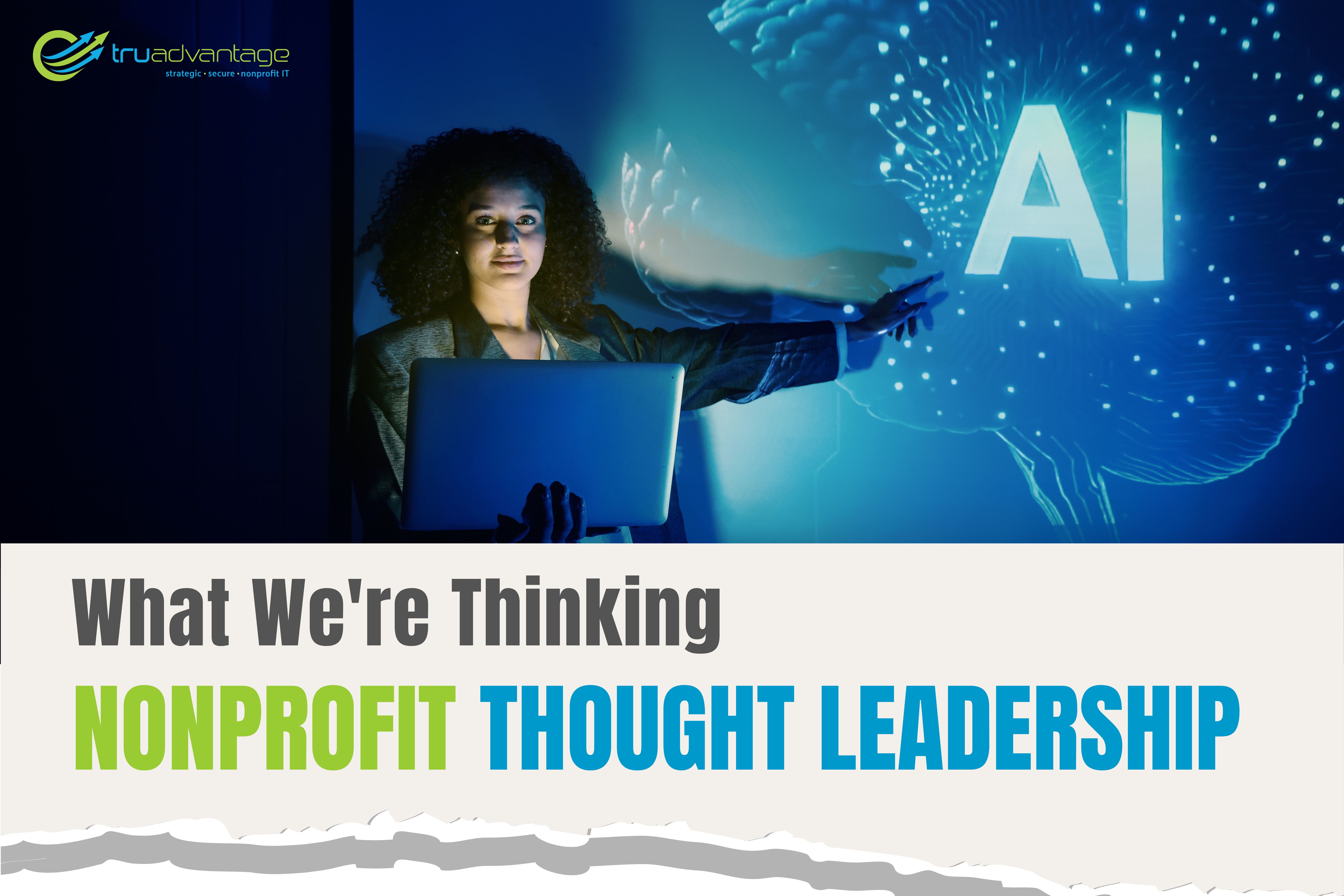
Artificial intelligence is moving faster than policy, especially in nonprofits. Staff are using AI tools to draft emails, analyze data, write grants, and summarize reports, often with good intentions and zero guardrails.
The risk is not AI itself.
The risk is AI without governance.
A Familiar Nonprofit Scenario
A development team member uses a popular AI tool to help draft donor communications. To make the output better, they paste in real donor notes and giving history. The tool is public. No one realizes that the data may now be stored, reused, or exposed outside the organization.
No breach alert is triggered. No system is hacked.
But donor trust is quietly compromised.
This is the reality many nonprofits face today.
The Lesson
AI adoption without governance creates invisible risk.
And invisible risk is the hardest to manage.
AI governance is not about stopping innovation. It is about protecting your mission, your donors, and your reputation while still allowing teams to work efficiently.
1. Why AI Governance Is Now a Board Level Issue
AI risk is no longer just an IT concern. It touches privacy, ethics, compliance, and public trust.
Real world example
A nonprofit board asks whether donor data is ever entered into AI tools. Leadership cannot confidently answer yes or no.
Why it matters
Boards are increasingly accountable for data protection and organizational risk. AI governance provides clarity, accountability, and defensible answers.
This aligns closely with modern Managed Compliance Services for Nonprofits, where policy, documentation, and oversight matter as much as technology.
2. How Shadow AI Creates Hidden Exposure
Shadow AI refers to AI tools being used without organizational approval, visibility, or safeguards.
Real world example
Staff use multiple AI platforms for writing, data analysis, or summarization, each with different data handling practices.
Why it matters
Without visibility, nonprofits cannot assess where sensitive data may be stored or reused. This creates risk for donor privacy, client confidentiality, and regulatory compliance.
A nonprofit focused MSP can help uncover and reduce Shadow AI just like Shadow IT.
3. Why Policies Matter More Than Tools
AI governance starts with clear, practical policies, not complex technology.
Real world example
A nonprofit defines which data types are never allowed in AI tools, such as donor records, health data, or client case notes.
Why it matters
Clear policies empower staff to use AI responsibly instead of guessing. This reduces accidental exposure while supporting productivity.
AI policies naturally extend existing IT and security governance within Managed IT Services for Nonprofits.
4. How AI Risk Impacts Donor Trust
Donors care deeply about how their data is handled, even if they never mention AI directly.
Real world example
A donor asks how their information is protected in an era of AI driven tools.
Why it matters
Trust is central to fundraising. A single AI related data incident can damage credibility far beyond the original mistake.
Strong governance reinforces the same protections nonprofits rely on through Managed Cybersecurity
We are an Nonprofit-focused, Award-winning IT Solutions providers in San Francisco, San Jose and Northern California.Need Managed IT Services for your Nonprofit?
5. Why AI Governance Must Be Ongoing, Not One Time
AI tools evolve constantly. Governance cannot be a one time document.
Real world example
A nonprofit reviews AI usage quarterly, updates policies, and educates staff as tools and risks change.
Why it matters
Ongoing governance keeps nonprofits ahead of risk, supports cyber insurance expectations, and demonstrates due diligence to auditors and funders.
This ongoing approach fits naturally into Managed IT and Managed Compliance models designed for lean nonprofit teams.
Takeaway
AI can be a powerful force for good in nonprofits, but only when used responsibly.
AI governance helps nonprofits:
- Protect donor and client data
- Reduce invisible risk from Shadow AI
- Provide clear answers to boards and auditors
- Enable innovation without sacrificing trust
AI should accelerate your mission, not put it at risk.
Get Your Free IT and Security Health Check for Nonprofits
At TruAdvantage, we help nonprofits build practical AI governance frameworks that balance innovation, security, and compliance, without fear-based messaging or unnecessary complexity.
From AI usage policies to visibility, training, and ongoing oversight, we align technology decisions with your mission and values.
Download our Exclusive Nonprofit Guide to get started.
And if you’d like tailored advice, schedule a Free IT and Security Health Check for your Nonprofit Organization. If you are asking these questions, you are already on the right path.
Click here to schedule a call with us
Categories: NonProfit Orgs