
- Are your nonprofit staff still trusted just because they are logged in?
- Do volunteers or remote workers access donor or client data from personal devices?
- Would one compromised account disrupt programs, services, or donor trust?
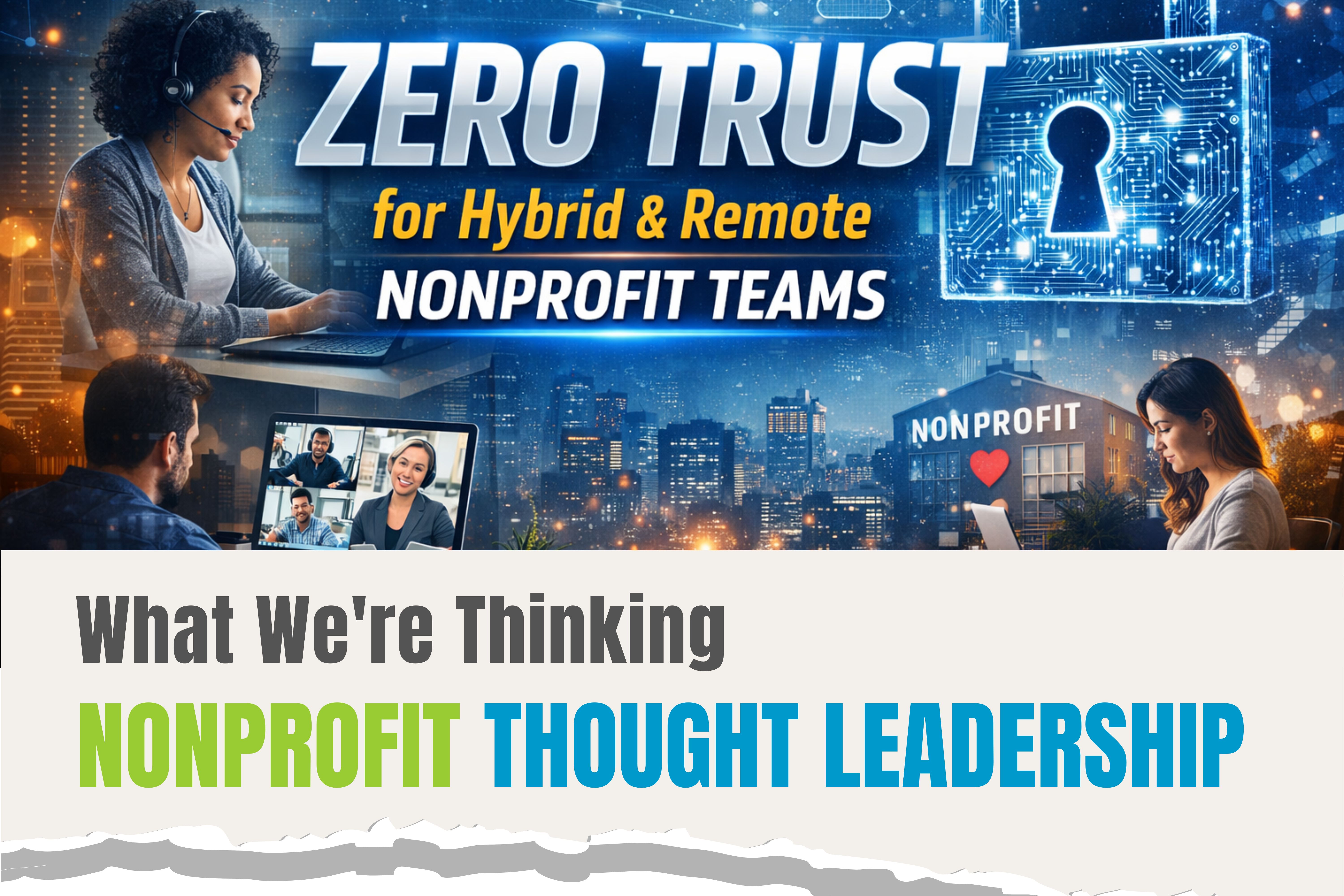
Hybrid and remote work are now permanent across the nonprofit sector. While flexibility has expanded reach and engagement, it has also quietly increased cyber risk. Many nonprofits are still relying on outdated trust models that no longer reflect how work actually gets done.
This is exactly where Zero Trust becomes essential.
A Familiar Nonprofit Story
A growing nonprofit supports remote program managers, part-time volunteers, and distributed fundraising staff. Everyone uses Microsoft 365, cloud file sharing, and online donor platforms. Access is granted once someone logs in, with little validation beyond a password.
One volunteer falls for a phishing email. The attacker logs in using valid credentials. No malware. No alarms. Donor records and internal files are accessed before anyone notices.
Nothing was hacked. Trust was simply assumed.
The Lesson
When trust is automatic, attackers do not need to break in. They just log in.
Zero Trust removes blind trust and replaces it with continuous verification, without slowing down staff or volunteers.
1. Why Identity Is the New Security Perimeter
In hybrid nonprofits, the office network is no longer the center of security. Identity is.
Real world example
A remote employee logs in from a new location using MFA. Access is granted only after identity is verified, reducing the risk of credential theft.
Why it matters
Most nonprofit breaches begin with stolen credentials. Identity-based security stops attackers even when passwords are compromised.
This approach is foundational to modern Managed Cybersecurity for Nonprofits and aligns directly with how cloud tools are used today.
2. How Least Privilege Limits the Blast Radius
Zero Trust ensures users only access what they need, when they need it.
Real world example
Volunteers access specific tools for events or outreach but cannot view donor databases or financial systems.
Why it matters
If one account is compromised, damage is contained rather than organization wide. This is critical for protecting donor trust and client confidentiality.
Least privilege access is a core component of secure Managed IT Services for Nonprofits.
3. Why Device Trust Matters in Remote Work
Not all devices are created equal.
Zero Trust verifies device health before granting access.
Real world example
A staff member attempts to log in from an outdated or unencrypted device. Access is blocked until the device meets security standards.
Why it matters
Personal laptops and shared devices are common in nonprofits. Device verification prevents accidental exposure of sensitive data.
This is especially important as nonprofits move more workloads into the cloud using Secure Cloud Solutions.
4. How Continuous Verification Stops Modern Attacks
Traditional security checks users once and trusts them all day.
Zero Trust continuously evaluates behavior.
Real world example
A login attempt suddenly appears from a foreign country minutes after a local login. Access is automatically blocked or re verified.
Why it matters
Threats evolve quickly. Continuous verification detects risk in real time instead of after damage is done.
This capability is a major advantage of working with a nonprofit focused MSP that provides built in security monitoring.
We are an Nonprofit-focused, Award-winning IT Solutions providers in San Francisco, San Jose and Northern California.Need Managed IT Services for your Nonprofit?
5. Why Zero Trust Works for Lean Nonprofit Teams
Zero Trust is often misunderstood as complex or expensive. In reality, it simplifies security for small teams.
Real world example
A nonprofit replaces legacy VPNs and patchwork tools with identity driven access policies managed by their MSP.
Why it matters
Zero Trust reduces infrastructure complexity, improves compliance readiness, and supports cyber insurance requirements without adding headcount.
It fits naturally into Managed Compliance Services for Nonprofits, helping organizations stay audit ready without overwhelm.
Takeaway
Hybrid and remote work are here to stay. Trust based security should not be.
Zero Trust helps nonprofits:
- Protect donor and client data
- Support flexible work models
- Reduce cyber risk without adding staff
- Build confidence with boards, auditors, and insurers
Security should enable your mission, not slow it down.
Get Your Free IT and Security Health Check for Nonprofits
At TruAdvantage, we help nonprofits design Zero Trust strategies that fit real world budgets, teams, and missions, without enterprise complexity or fear based messaging.
Whether you need secure remote access, identity protection, or a long term IT and security roadmap, we align technology with your mission.
Download our Exclusive Nonprofit Guide to get started.
And if you’d like tailored advice, schedule a Free IT and Security Health Check for your Nonprofit Organization. If you are asking these questions, you are already on the right path.
Click here to schedule a call with us
Categories: NonProfit Orgs